Welcome to historical place |
||
Galle Town 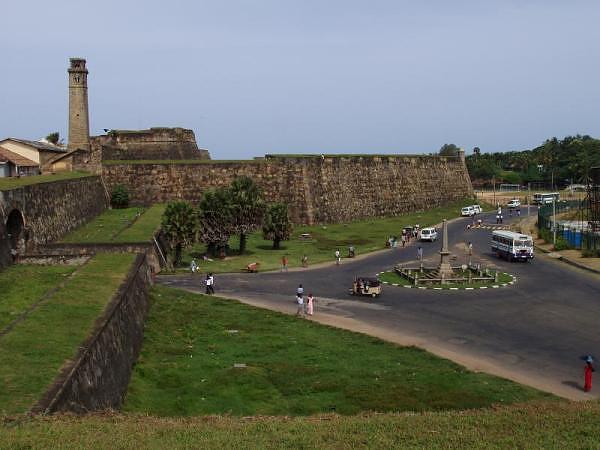
Galle is really a tale of two cities. Inland, to the north of the Colombo-Matara Road, is the modern commercial town characterised by a jumble of bustling stores, warehouses and small restaurants. Here, by the banks of the old Dutch Canal, may be found the railway station, bus station and main bazaar. It's a place to arrive, leave, eat, shop for necessities or change money. The only building worthy of note is St Mary's Cathedral, built by the British in 1874, and of more interest for the views its provides over the Old Town than for any intrinsic architectural merit. Nevertheless, "New Galle" is the beating commercial heart of the city without which the Old Town would have difficulty surviving, and would lose much of its bucolic charm. Immediately south of the Colombo-Matara Road, and dividing the commercial sector from the old fort, lies an area of open land which, since 1998, has acquired increasing international fame. Once known simply as The Esplanade, it is now graced with the title Galle International Stadium, an international test cricket venue which continues to grow in stature and reputation alongside the remarkable successes of the Sri Lankan national team. Sigiriya 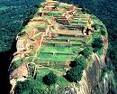
Sigiriya is an ancient rock fortress and palace ruin situated in the central Matale District of Sri Lanka, surrounded by the remains of an extensive network of gardens, reservoirs, and other structures. A popular tourist destination, Sigiriya is also renowned for its ancient paintings , which are reminiscent of the Ajanta Caves of India. The Sigiriya was built during the reign of King Kassapa I, and it is one of the seven World Heritage Sites of Sri Lanka. The Mahavamsa, the ancient historical record of Sri Lanka, describes King Kasyapa as the son of King Dhatusena. Kasyapa murdered his father by walling him alive and then usurping the throne which rightfully belonged to his brother Mogallana, Dhatusena's son by the true queen. Mogallana fled to India to escape being assassinated by Kasyapa but vowed revenge. In India he raised an army with the intention of returning and retaking the throne of Sri Lanka which he considered was rightfully his. Knowing the inevitable return of Mogallana, Kasyapa is said to have built his palace on the summit of Sigiriya as a fortress and pleasure palace. Mogallana finally arrived and declared war. During the battle Kasyapa's armies abandoned him and he committed suicide by falling on his sword. Chronicles and lore say that the battle-elephant on which Kasyapa was mounted changed course to take a strategic advantage, but the army misinterpreted the movement as the King having opted to retreat, prompting the army to abandon the king altogether. Moggallana returned the capital to Anuradapura, converting Sigiriya into a monastery complex. |
Kalutara Bodhiya 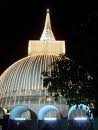
Situated at the estuary of the Kalu Ganga river, Kalutara has a beautiful golden palm-fringed beach, which is excellent for swimming. In the 17th century the town was an important spice-trading centre, but the cinnamon trees that once grew here in profusion have long gone and today it is known for the quality of its bamboo baskets and coir mats. Most amenities and entertainment revolve around the hotels, which stretch from Mahawaskaduwa to the north and to Katukurunda to the south. Just beyond the Kalu Ganga bridge, visitors will notice the Gangatilaka Vihara, where Buddhist motorists stop to pray for a safe journey. Although built in the form of a dagoba, it contains no relic and is one of the few Buddhist monuments you are permitted to enter. Kalutara Bodiya is about 40km south of Colombo and 80km north of Galle and is a well known tourist spot. |
|
